
The inspiring life of Servant of God Catherine Doherty, a Russian-Canadian mystic and founder of the Madonna House Apostolate, looks like a pretty classic saint story at first. In 1947, Catherine and her husband Eddie moved to Combermere, Ontario, a small town on the river, on a little piece of land. Over the coming decades, they founded a religious community that would draw thousands to their simple, quiet way of life - one that involved prayer, Liturgy, and manual labour.
In 1975, Catherine published her famous book “Poustinia,” whose name was taken from the Russian word for desert. In it, she described a simple, beautiful, but extremely challenging spiritual exercise, wherein a person would enter a barren cabin for at least 24 hours with nothing but the Bible, some note paper, a crucifix, coffee, tea, and a loaf of bread. The Poustinia became a huge draw for people to Madonna House, and countless people have made retreats at the cabins in their centres.
What many people don’t know about Catherine Doherty, the popularizer of one of the most well-known modern Catholic silent retreats, was what a busy, seemingly extroverted person she was. We’re all used to the image of a saint being quiet, reserved, and pious. Catherine, on the contrary, was nicknamed “The Baroness,” both for her noble Russian heritage and her straightforward personality. Before starting Madonna House, she was employed as a cocktail waitress and a lecturer on racism and had also founded two separate apostolates in Toronto and then Harlem. This is not the biography of a woman with a limited social life.
Catherine Doherty’s approach to silence and solitude, and the Poustinia, was far different than what many of us are used to. Silence is often understood as something that we withdraw to. The world is chaotic and noisy and we need a reprieve – a place where we can slow down and be attentive to God’s voice. This is a beautiful and important reality but especially for those of us who call ourselves extroverts (and who might even kind of like the chaos and noise!) we need to search for something deeper.
As much as we might truly love the presence of other people, as extroverts we always run the risk of seeking the presence of others not for their own sake but for ours. If we’re not careful, our desire to be with others can become a way we use people, rather than love them. For us, silence is not a practice of retreat, where we escape the world, but rather a place where we learn to love the people we so enjoy the presence of more deeply. As Catherine once said “We need silence in order to be able to listen to our brothers, to listen with the heart. We need silence to open our souls to our brothers, making an inn for the thousands who may be living in palatial homes but have no place to lay their burdens of loneliness.”
It’s for this reason that extroverts might need to intentionally cultivate silence in their lives even more than introverts because we need it not for ourselves but for the sake of others. If we want to fulfill Christ’s commandment to love others as He has loved us, we must make space to receive His love so that we are actually capable of giving it to others.
So where do we start? Along with a love for people, another common trait of extroverts is wholeheartedness. Many of us love to commit ourselves completely to a task. This is a great asset in many ways but when it comes to silence, it can work against us.
I remember the first time I tried to take a poustinia in earnest. I went into a trailer with no plan - no materials, hardly any food, and absolutely no noise. It was miserable. Worse, I came out of the retreat irritable and grumpy towards those around me, not more loving. I missed the point.
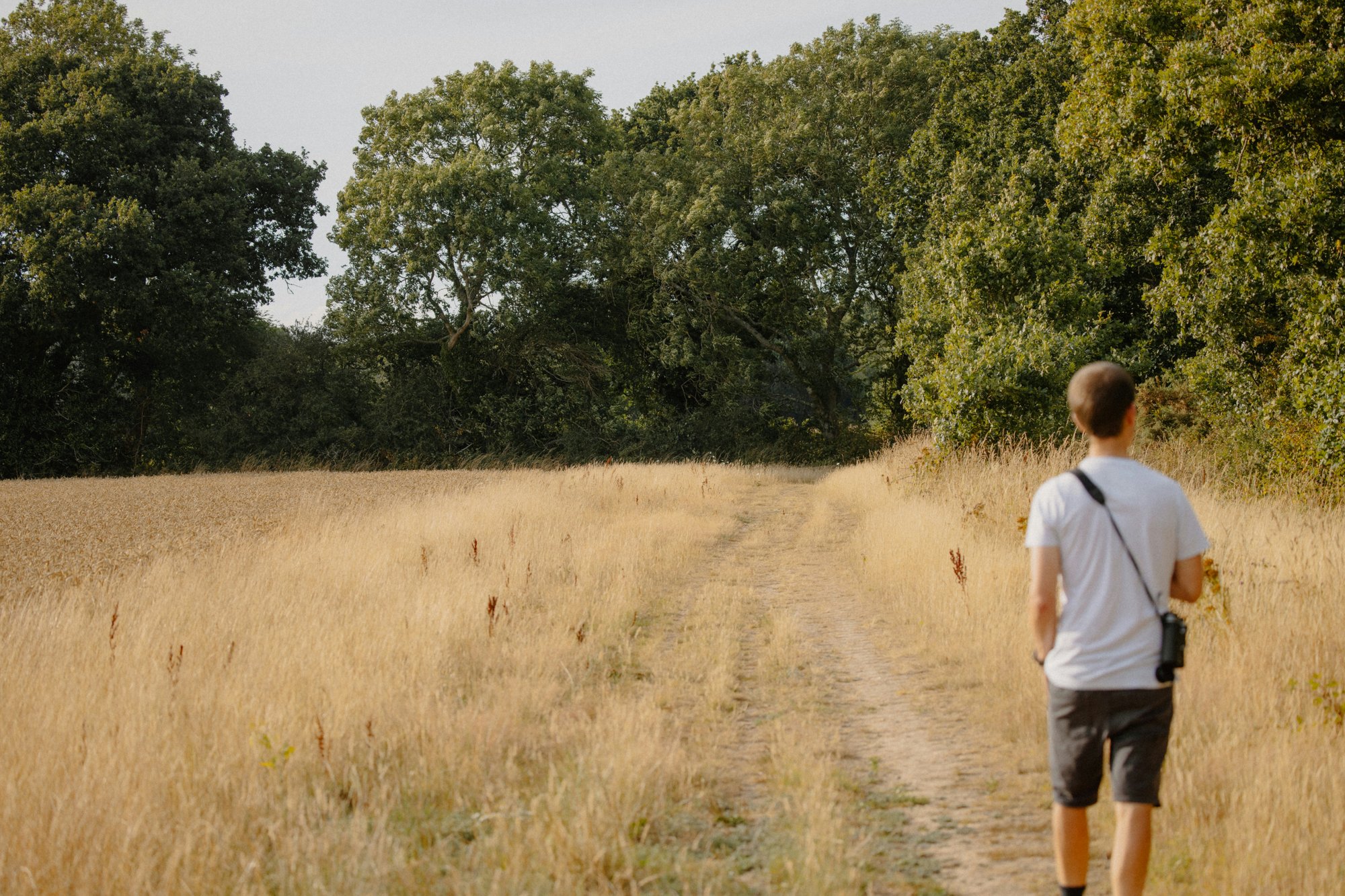
Far more fruitfully, a while back I started taking 15 minutes at the beginning of each day just to walk around my neighbourhood after my personal prayer. It was nothing particularly intense. I just tried my best to quiet my heart and engage meaningfully with my heavenly Father. Unlike the experience of my first poustinia, this was doable. It took a few days for my heart, mind, and body to fully engage with the silence but after some time, it became something I looked forward to, a time I needed to love God more deeply and share that love with those around me.
I noticed that when I came home after those walks, I was capable of being more gentle, more patient, and more kind with my wife and children. The silence was shaping me into a person who was able to love more deeply. Even more, the regular practice of silence formed in me a greater capacity simply to sit with the presence of God. Growing in the ability to engage with other people from deep relationship with God also meant that I didn’t need them to fulfill all my relational needs. I’ve become more content with allowing God to fill that space, to live wholeheartedly for Him and not just for external validation. In the silence I am reminded that I am loved by God and that that is enough.
Whether you’re an extrovert who knows the importance of and is actively seeking silence or someone experiencing resistance to the whole idea, don’t start with the 24-hour silent retreat. Start with a 15-minute walk. Let yourself slowly be immersed in the quiet. Often easing into the practice gives our desire for it a chance to catch up. Let your motivation be a desire to love God and others well, and to let your heart experience the love of God more deeply. It will be more fruitful for you and more fruitful for others. Be like Catherine Doherty, who put love of others first and in her desire to be with and care for people discovered the transformative power of a little time alone.